Cloud release evidence and research state
Separate research labels, code, gates, deployed identity, subscriber routing and certification.
A filename cannot own production
A file labelled LIVE can describe a research state while never being merged, registered, deployed or routed to subscribers. An endpoint inventory can describe available code without proving which revision executes. A grade map has another purpose. Record research identity, code/merge state, registry gate, deployed revision, actual route and certification separately. The authorised production deployment ledger is the source for actual model state, not an inference from a name. This guide does not read or claim any particular model's live status; it explains the evidence objects a real deployment task would have to inspect.
A real cloud artifact has a bounded claim
A deployment receipt should identify actual managed execution, its producing revision and durable output, followed by independent readback. The static website release uses a frozen public-file stage and verifies public content, schemas, downloads and private boundaries. That proves publication under its own identity, not a deployed trading model, refreshed data pipeline or subscriber certification. A local test can support development without owning normal production continuity. Production publishers, refreshes, schedulers, monitors and recovery must continue with personal computers and local agent sessions off.
A completed fictional label mismatch
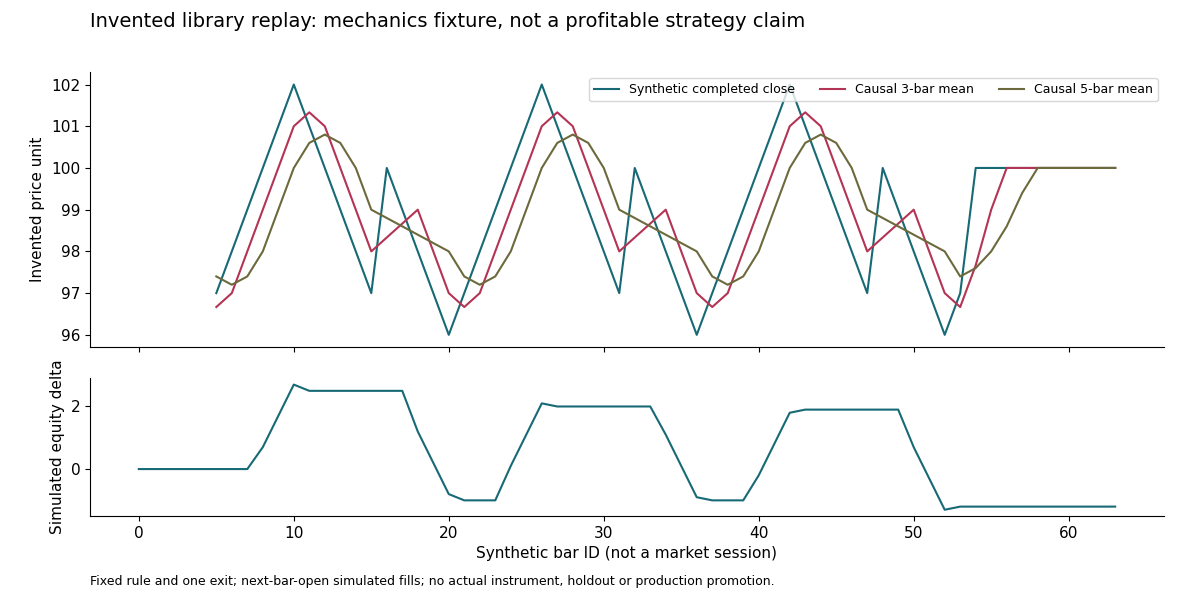
An invented research folder says LIVE, the code is unmerged and no registry or cloud execution receipt is provided. The correct finding is research label present with deployment unresolved. Renaming the folder, adding an endpoint or producing a local plot would not fill the missing records. A later verified cloud artifact could change a bounded code/runtime finding while subscriber routing and certification still need separate evidence. The teaching replay has false production-promotion status and no actual account, so its complete mechanics cannot be used to bypass that distinction.
Preserve monitoring and failure ownership
Moving production ownership to the cloud must not erase a required monitor, weaken certification or silently discard an unresolved operational function. A real task needs authoritative cloud state, failure reporting and recovery under the intended owner. The website creates no desktop scheduler, tunnel, unattended agent dependency or PC fallback. Its temporary QA server closes after browser testing. The synthetic source launcher is an optional local teaching reconstruction, not a required input for a running production job or next scheduled refresh. A production claim remains incomplete until the actual cloud and route evidence exists, regardless of how dense the educational page becomes.
Filled invented system case
The fictional record has a research LIVE label and source code but no merged revision, registry gate, cloud receipt or subscriber route. The reviewer does not declare deployment from those first two objects. The BATS website's own cloud publication receipt concerns static educational files only. Its source packet has no production authority. The completed finding separates known research/code context from the missing operational evidence rather than pretending one local run certifies all stages.
| Object | Record | Bounded finding |
|---|---|---|
| Research label | LIVE text exists | Not deployment proof |
| Code state | Unmerged in example | Separate record |
| Cloud execution | No actual receipt in example | Unresolved |
| Route/certification | Other authoritative records needed | Not inferred |
Primary references and scope
Expanded source review: 13 October 2026. Documentation supports the stated mechanism, not a tested account, hypothetical fill or provider outcome.